Liver tumors
L-type expandable electrode · Automatic mode
Example model · RSNEL-15-3
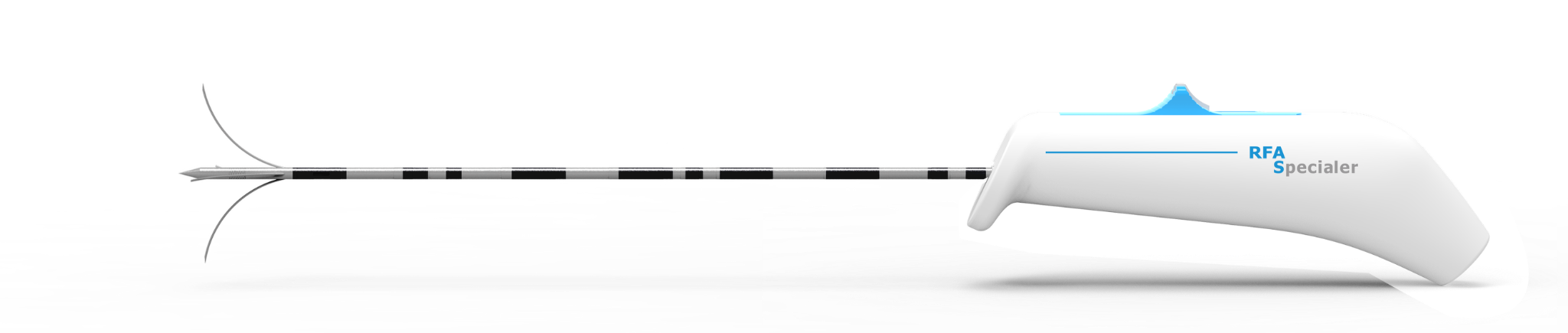
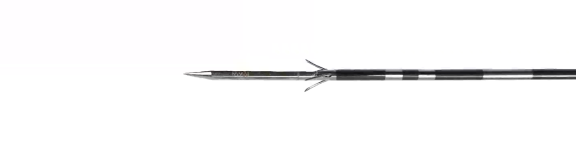
The main needle delivers RF energy. Four deployable tines measure local temperatures, and the generator uses temperature and impedance feedback to adjust power.

The generator recognizes an expandable electrode for liver tumors or a straight electrode for benign thyroid nodules. Both configurations use the same RF generator, circulating cooling system and independent needle-tract mode.
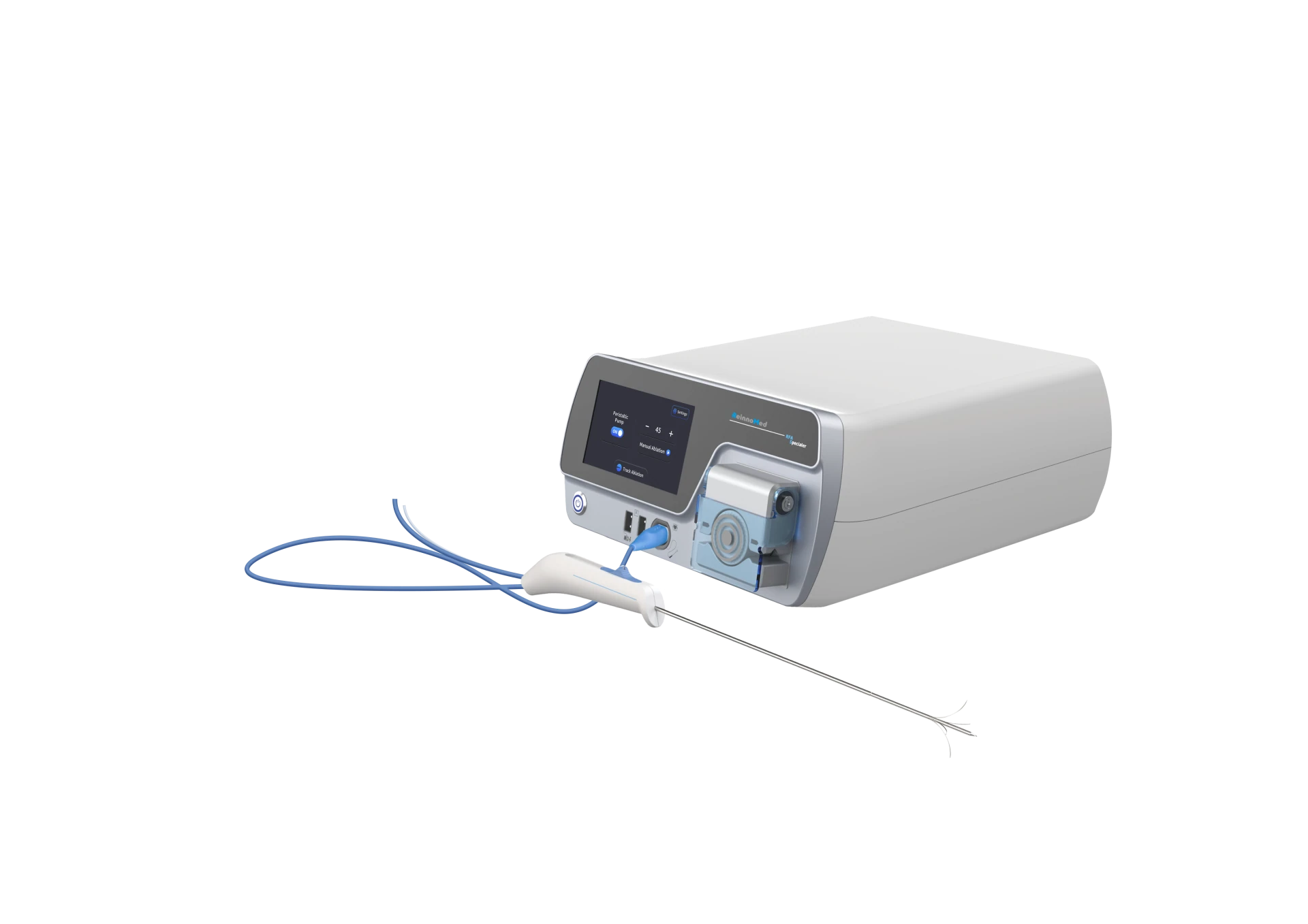
When an electrode is connected, the generator displays its model and application and opens the corresponding operating screen.
L-type expandable electrode · Automatic mode
Example model · RSNEL-15-3
The main needle delivers RF energy. Four deployable tines measure local temperatures, and the generator uses temperature and impedance feedback to adjust power.
T-type straight electrode · Manual mode
Example model · RSNET-10-1
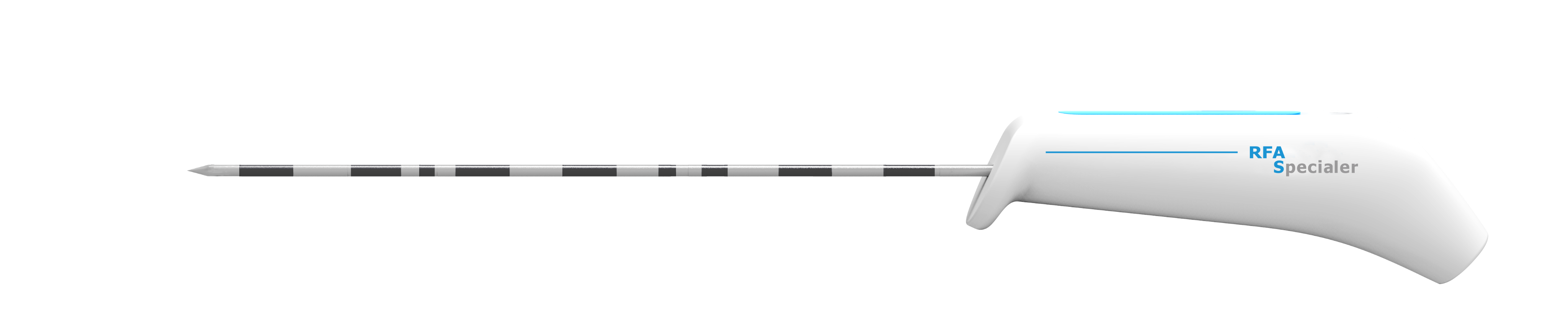
The operator sets the power. The screen shows temperature, power, impedance and elapsed time. Temperature can trigger power reduction, and impedance can trigger an automatic stop.
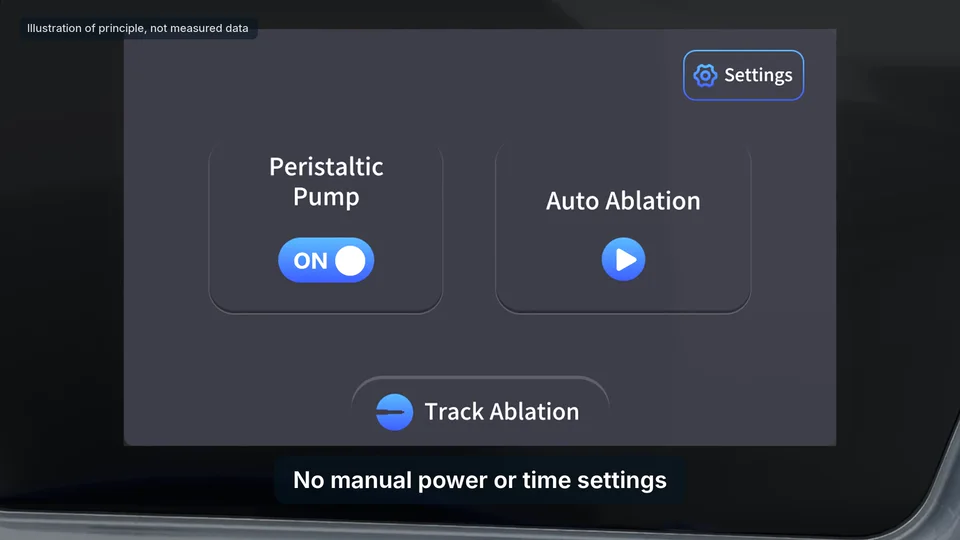
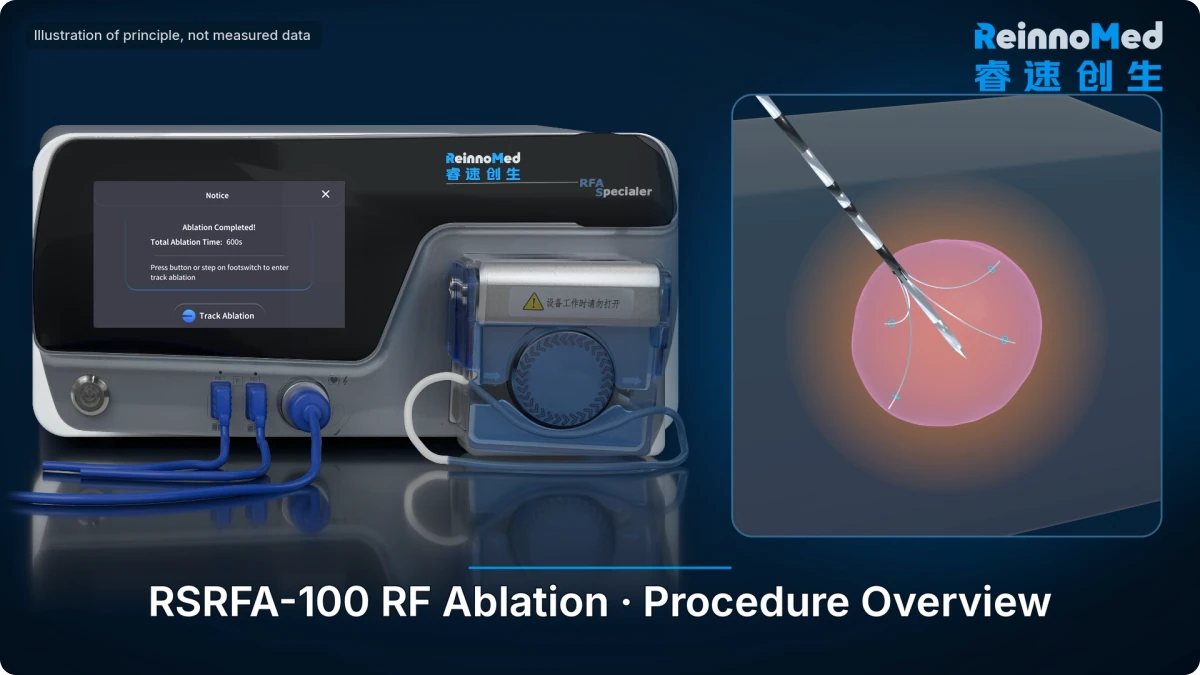
In L-type automatic mode, the generator loads the starting power and duration for the connected electrode model. Once electrode preparation and cooling are confirmed, the operator starts ablation without entering either setting.
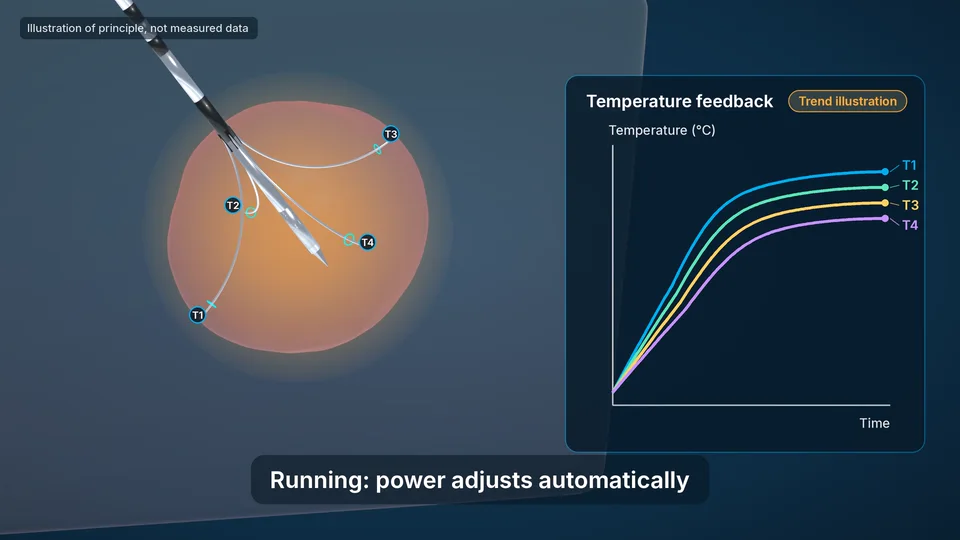
During ablation, temperature and tissue impedance guide power adjustments. Output stops at the preset time, and the operator can end it earlier.
The exposed working segment of the L-type main needle delivers RF energy. Four sensing tines extend from the shaft and measure temperature at four separate points around it.
The touchscreen shows all four temperatures alongside power, tissue impedance and elapsed time. The physician can follow changes at individual points while the generator uses the feedback to regulate output.
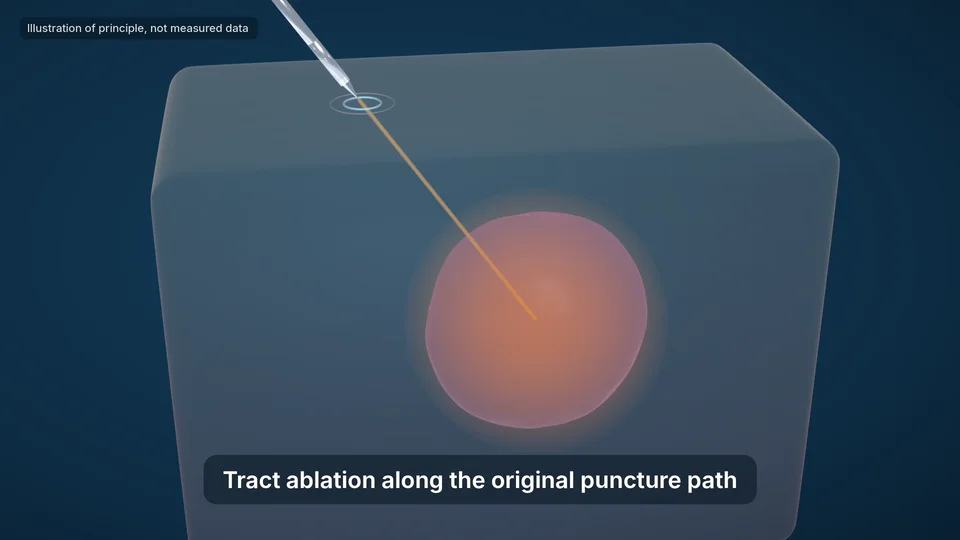
After main ablation, the operator can select a separate mode to deliver RF energy along the needle tract during withdrawal. Both electrodes support this mode on the same generator.
Tract power is set independently. The operator controls when output starts and stops. Circulating cooling and temperature monitoring are inactive in this mode.
L-type presets reduce the number of settings to learn. Seeing four temperatures beside power, impedance and time helps physicians relate changes in output to the readings on screen.
Teams can train together on a common device workflow, from identifying the electrode and confirming preparation to starting, monitoring and stopping output.
Hospitals with trained ablation teams can use one generator for both electrode configurations, circulating cooling and needle-tract treatment. Teams can plan their equipment setup around the liver or thyroid configuration they use.
RSRFA-100 · Software V1. Refer to the applicable instructions for use for indications, operating conditions and guidance for trained clinical teams.
Ask for available product and configuration documents.
Request information ›Ask about current system and electrode demonstrations.
Request information ›Request information for the application you are evaluating.
Request information ›Explore the liver or thyroid configuration with your team, from electrode recognition and cooling through main ablation and independent needle-tract control.